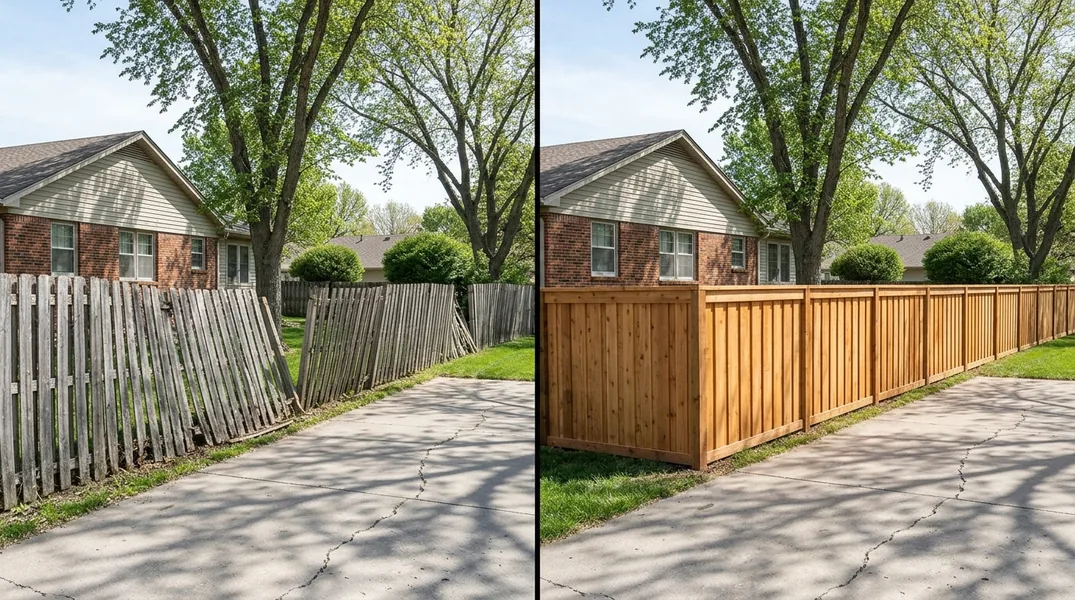
Understanding Lincoln's Climate Challenges for Fencing
If you live in Lincoln, you know that our Nebraska weather is no joke. The prairie winds can gust over 30 miles per hour, winter temperatures plunge well below freezing, and spring brings moisture that tests any material's durability. When you're considering a fence installation for your property, these climate realities must shape your decision. The wrong fence material can deteriorate rapidly, leaving you with costly repairs or replacement within just a few years.
Both wood and vinyl have their advocates, and both can work in Lincoln's environment, but they handle our seasonal extremes very differently. Understanding how each material responds to freeze-thaw cycles, UV exposure, and wind stress will help you make an informed choice that protects your investment long-term.
Wood Fencing: Classic Appeal Meets High Maintenance
Wood & Privacy Fence Installation has been the traditional choice for homeowners who want that warm, natural aesthetic. Wood offers excellent privacy, blends beautifully with landscaping, and provides a classic look that many Lincoln neighborhoods favor. A properly installed wood fence can last 15 to 20 years, which sounds reasonable until you factor in the ongoing maintenance required to achieve that lifespan.
Here's the reality: wood is porous and absorbs moisture. During Lincoln's freeze-thaw cycles, water trapped in the wood expands and contracts, causing splitting, warping, and checking (small surface cracks). Winter ice can also place stress on fence posts and panels. To combat these issues, you'll need to stain or seal your wood fence every two to three years, which means renting equipment, purchasing materials, or hiring contractors. Add in occasional board replacement, post reinforcement, and pest inspections, and the true cost of ownership climbs significantly. Wood is also vulnerable to rot, termites, and wood-boring insects, particularly in areas where snow sits longest or drainage is poor.
Vinyl Fencing: Low Maintenance Through Nebraska Winters
Vinyl & PVC Fence Installation has gained popularity over the past two decades, and for good reason. Vinyl is manufactured from polyvinyl chloride, a synthetic material that does not absorb water, rot, or attract pests. It won't splinter, crack from freeze-thaw cycles, or require staining and sealing. For homeowners who want a best low maintenance fence option, vinyl delivers on that promise.
The material's non-porous nature means it shrugs off Lincoln's harsh winters without the wood's vulnerability to moisture damage. You won't wake up in spring to find panels warped or posts rotted. Maintenance is refreshingly simple: occasional washing with a garden hose and mild soap keeps it looking new. Vinyl can last 25 to 30 years or longer with virtually no structural degradation. However, vinyl does have one weakness in extreme climates. In very cold temperatures, vinyl becomes slightly more brittle, and high-impact damage (like a falling tree branch or a hard kick) can crack a panel more easily than wood might dent. Additionally, vinyl can expand and contract slightly with temperature swings, though quality installation accounts for this.
Vinyl vs Wood Fence Cost: Initial Investment and Long-Term Value
When comparing vinyl vs wood fence cost, the upfront numbers favor wood. A wood fence typically costs 30 to 50 percent less per linear foot than vinyl. If you're installing 200 linear feet of privacy fencing, that initial savings can be substantial, which is why budget-conscious homeowners often lean toward wood. However, initial cost tells only half the story. Over a 20 to 30-year period, the total cost of ownership paints a very different picture.
Consider the math: a wood fence requires professional staining or sealing every 2-3 years at a cost of $1,500 to $3,000 per application for a typical residential property. Over 20 years, you're looking at six to ten applications, plus board replacements, post repairs, and potential rot remediation. A vinyl fence, by contrast, has minimal maintenance costs. You might spend $200 to $400 annually on basic cleaning supplies, but that's it. When you calculate total cost over the fence's lifespan, vinyl often breaks even or comes out ahead, while providing superior durability in Lincoln's climate. The peace of mind knowing your fence won't deteriorate during harsh winters is also worth considering. For a detailed breakdown of pricing for your specific project, reach out to Lincoln Fence at (402) 858-4049.
Durability and Performance: How Each Material Handles Nebraska Weather
Wood's durability in Lincoln's climate depends heavily on the species used and installation quality. Pressure-treated pine and cedar are common choices, but even these require regular maintenance to resist rot and insect damage. The freeze-thaw cycle is particularly harsh on wood because moisture penetrates the material, freezes, expands, and creates stress fractures. Over multiple winters, these micro-fractures accumulate, leading to visible damage. Wind can exacerbate the problem by driving moisture into seams and joints. A wood fence in Lincoln that isn't meticulously maintained often shows significant wear within 10 to 12 years.
Vinyl, on the other hand, is engineered to withstand temperature extremes. Quality vinyl fencing is manufactured with UV stabilizers to resist sun damage and is formulated to remain flexible enough that it won't become brittle in sub-zero temperatures. Wind doesn't affect vinyl the way it does wood because there's no grain structure to split or warp. Freeze-thaw cycles are irrelevant since vinyl doesn't absorb water. The material's consistency means you can predict its performance decade after decade. If you live in a rural area near Waverly or Hickman where wind is particularly strong, vinyl's resistance to weather stress becomes even more valuable.
Making Your Decision: Which Fence is Right for Your Lincoln Home
Choosing between wood and vinyl ultimately depends on your priorities. If you value natural aesthetics, enjoy hands-on home maintenance, and have a tight initial budget, wood may appeal to you. Just understand that you're committing to regular upkeep and accepting the likelihood of repairs and replacement panels over time. If you prioritize low maintenance, long-term durability, and protection against Lincoln's weather extremes, vinyl is the more practical choice despite the higher upfront cost.
The best way to make this decision is to discuss your specific situation with experienced professionals who understand local conditions. Lincoln Fence has installed both wood and vinyl fencing throughout the area and can help you weigh the pros and cons for your property. We'll consider your climate exposure, maintenance tolerance, aesthetic preferences, and budget to recommend the best solution. Contact us at (402) 858-4049 or request a free estimate today, and let's find the perfect fence for your home.
Looking for a professional fence contractor in Lincoln? Lincoln Fence responds fast for all your fence needs.
Get a Free Quote