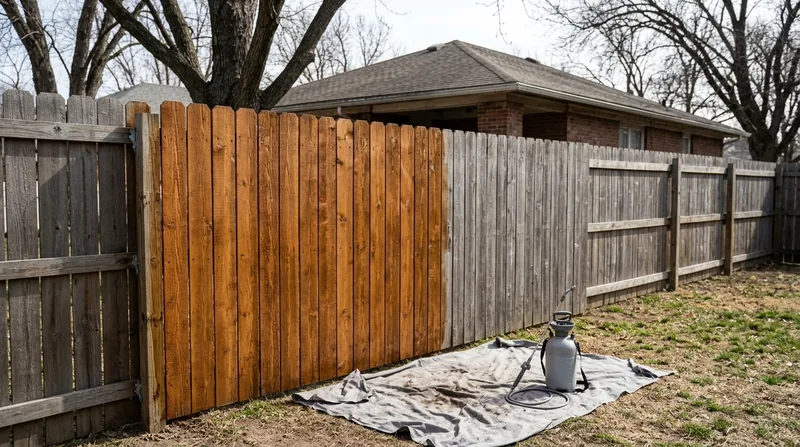




Cedar and treated-pine privacy fences in Lincoln take a beating from the Great Plains climate. Summer sun bleaches the wood silver, spring thunderstorms and hail drive moisture deep into the grain, freeze-thaw cycles in our heavy loess soil heave posts and crack boards, and by year four or five even a well-built fence starts to look weathered. Fence staining in Lincoln is not cosmetic. Done right, it seals the wood against moisture, brightens the color back to usable life, and can double the service years you get before replacement becomes the only option. We clean, brighten and seal cedar fences to protect them through the seasons ahead, and we tell you honestly when staining still makes sense and when the wood has rotted too far to save.
Why Fence Staining and Restoration Matters in Lincoln's Climate
Lincoln sits on gently rolling prairie along Salt Creek under a wide open sky, and that exposure is hard on wood. Our mature hackberries, honeylocusts, oaks and elms shade some yards, but most residential fences stand in full sun. The combination of intense summer heat, spring hail, wet clay soil, and winter freeze-thaw cycles creates the conditions that age a fence fastest. Cedar and pressure-treated pine absorb moisture at the ground line and in the grain, which causes rot, checking, and cupping. UV rays fade the finish year after year. A fence that looks solid on the surface may have lost half its structural life to hidden moisture damage.
- Sealing the wood stops moisture from penetrating the grain and causing rot at the posts and rails.
- Brightening removes the grey weathered layer and restores the natural color, which improves curb appeal and shows the fence is maintained.
- A quality stain with UV protection blocks the sun and keeps the wood from fading and becoming brittle.
- Staining extends the life of a fence by 5 to 10 years when done every 3 to 5 years, depending on sun exposure and rainfall.
Without staining, a six-foot privacy fence in a sunny yard can fail at the posts in 8 to 12 years. With staining on a regular cycle, you often get 15 to 20 years of service before replacement is needed.
Key info: Lincoln's heavy loess and clay soil holds moisture against fence posts all year. Posts set in concrete stay drier than tamped soil, but even concrete-set posts can fail at the ground line if water wicks up from the soil. Staining the lower 12 to 18 inches of each post and sealing the top of the concrete keeps moisture out and adds years to the post life.
The Lincoln building department does not require a permit for fence staining or restoration on your own property. However, if your fence is in a historic district or subject to HOA architectural guidelines (common in Country Club, Fallbrook, the Highlands and Wilderness Hills subdivisions), confirm any color or finish restrictions with your HOA or the city before work begins. For more on what applies in your area, contact the Lincoln Planning Department.
How We Clean, Brighten and Seal Your Fence
Staining a fence is not a paint job. The wood has to be cleaned first to remove dirt, mildew, and the grey weathered fiber. We pressure-wash at a controlled PSI to avoid gouging the surface, then let the wood dry for 48 to 72 hours. Once dry, we inspect for soft spots, rot, or damage that needs repair before sealing. Then we apply a penetrating stain with UV blockers that soaks into the grain rather than sitting on top like paint. The result is a natural-looking finish that lets the wood grain show and breathes as the wood moves with humidity.
- We pressure-wash the fence at 1500 to 2000 PSI to clean without splintering or gouging the wood surface.
- We inspect all posts, rails, and pickets for rot, loose hardware, or damage that should be repaired or replaced before staining.
- We fill cracks and checks in the wood with a flexible wood filler to keep water from entering the grain.
- We apply a penetrating oil-based or acrylic stain with UV protection in one or two coats, depending on the wood type and color depth you want.
- We seal the top of fence posts and the concrete footings to prevent water from wicking up and rotting the wood from below.
The whole process takes 2 to 4 days, depending on fence length, weather, and any repairs needed. A 100-linear-foot fence in good condition can be cleaned, repaired and stained in one day. A fence with significant rot, loose boards, or broken pickets may need 2 to 3 days if repairs are included.
Local example: A six-foot cedar privacy fence in University Place or College View, typically 80 to 120 linear feet on a standard lot, takes one full day to clean and stain. A fence in Fallbrook or the Highlands with longer runs and more gates may take two days. We schedule around weather and drying time, so the work is done right and the stain cures properly before heavy rain or hail.
Staining Methods and Materials: What Works Best for Lincoln Fences
| Approach | Description | Best for |
|---|---|---|
| Oil-Based Penetrating Stain | Soaks into the wood grain, enhances natural color, rich appearance, UV protection built in, lasts 3 to 5 years. | Cedar fences in full sun, where color depth and grain visibility are priorities. Ideal for older wood that needs brightening. |
| Acrylic Latex Stain | Water-based, low VOC, easier cleanup, dries faster, good color range, moderate UV protection, lasts 2 to 4 years. | Pressure-treated pine fences or cedar in moderate shade. Good for homeowners who prefer lower fumes and easier application. |
| Solid Color Stain | Opaque finish that masks grain, heavy pigment load, maximum UV blocking, lasts 4 to 6 years, hides weathering and repairs. | Older fences with mixed repairs, pressure-treated pine in harsh sun, or when you want a uniform color that hides patching. |
| Semi-Transparent Stain | Lighter pigment, wood grain shows through, moderate UV protection, lasts 2 to 3 years, natural appearance. | Newer cedar fences in good condition where you want to preserve the wood look and are willing to restain more often. |
We recommend oil-based penetrating stain for most cedar fences in Lincoln because it handles our sun and freeze-thaw cycles well and looks natural. Acrylic latex works fine for pressure-treated pine and is easier to maintain. Solid color stain is the right choice if the fence has significant patching or mixed wood, or if it faces south and takes full sun all day.
Fence Staining and Restoration Cost in Lincoln: What to Expect
The cost of staining a fence depends on the fence length, the condition of the wood, and whether repairs are needed before staining. A straightforward cleaning and staining job on a well-maintained fence runs lower than work that includes board replacement, post repair, or extensive rot treatment. We price by the linear foot and account for access, the number of sides to stain (one side or both), and any structural work that should be done at the same time.
A typical 100-linear-foot cedar privacy fence in good condition costs from $950 to $1,400 to clean, brighten and seal. That covers both sides, one coat of quality stain, and sealing the posts and footings. A longer fence or one with more gates, rails, or ornamental trim will cost more per linear foot because of the detail work. A fence that needs board replacement, post setting, or rot repair before staining will add $200 to $600 or more, depending on the scope of repair needed.
Factors that move the cost up include tree cover and shade (which means slower drying and sometimes extra cleaning to remove mildew), proximity to structures or landscaping (which limits our access and spray distance), pressure-treated pine that needs heavier cleaning, or picket fences and board-on-board designs that take longer to stain because of the extra surface area. Steep terrain or soft soil around the fence line can also add time if we need to set up staging or walkways to work safely.
The best way to know the cost for your fence is to get a free estimate. We respond within 24 hours and can often schedule a walk-through the same day. Call us at (402) 858-4049 or visit our pricing page to see the full range for your area and fence type.
What to Look for When Hiring a Fence Contractor Near Me in Lincoln
Finding the right contractor for fence staining near Lincoln means checking a few key things before you sign. Insurance and a clear estimate are table stakes. You also need to understand how fence work is regulated in Nebraska and what permits or approvals might apply to your property. A good contractor will walk you through those questions upfront and not surprise you later.
Start by asking for proof of general liability and workers' compensation insurance. Next, get 2 to 3 estimates from different contractors and compare what they include, the stain type and brand they recommend, the warranty or guarantee on their work, and the timeline. Ask for references from recent jobs in Lincoln or nearby towns like Waverly, Hickman, or Ashland. Call those references and ask how the fence looks a year later and whether the contractor stood behind the work if issues came up.
Fence licensing in Nebraska is handled at the state and local level. Contractor registration is required by the state before performing construction work, and some cities and counties may require additional local permits. The Lincoln Planning Department can tell you what applies to your address and fence type. Do not assume that a contractor who has done work in one part of Lincoln is automatically licensed for your neighborhood. If your fence is in an HOA community (common in Fallbrook, the Highlands, Wilderness Hills, and Country Club), confirm that any stain color or finish meets the architectural guidelines before work starts. Changing it back later costs time and money.
Finally, ask about the warranty on the stain work. Most quality stain jobs carry a 1 to 2-year warranty against peeling or failure if the prep and application were done right. Ask what that covers and whether it includes touch-ups if weather or hail damage the finish. A contractor who stands behind the work is one worth hiring. For a free estimate and to discuss your fence and what to expect, contact us today.
Fence Staining & Restoration in Lincoln: Pricing Guide
| Service | Price | Details |
|---|---|---|
| Standard Fence Staining (100 linear feet) | Starting at $950 | Cleaning, brightening, and sealing both sides of a well-maintained cedar privacy fence in good condition, includes post sealing |
| Fence Staining with Repairs | Starting at $1,200 | Cleaning, staining, and repair of loose boards, cracked pickets, or damaged rails; soft-wood rot replacement adds additional cost based on extent |
| Pressure-Treated Pine or Board-on-Board | Starting at $1,100 | Heavier cleaning and extra surface area due to design; takes longer to stain properly and cost reflects the additional detail work involved |
| Large Fence or Complex Property | On estimate | Fences over 200 linear feet, steep terrain, heavy tree cover, or mixed materials require on-site assessment to price accurately |
| Travel and Estimate | Included and Free | No mileage charge in Lincoln and surrounding areas; free estimate with 24-hour response, no obligation to book our services |
Indicative pricing, the exact cost depends on square footage, finish, and site access. Free personalized estimate within 24h at (402) 858-4049.


