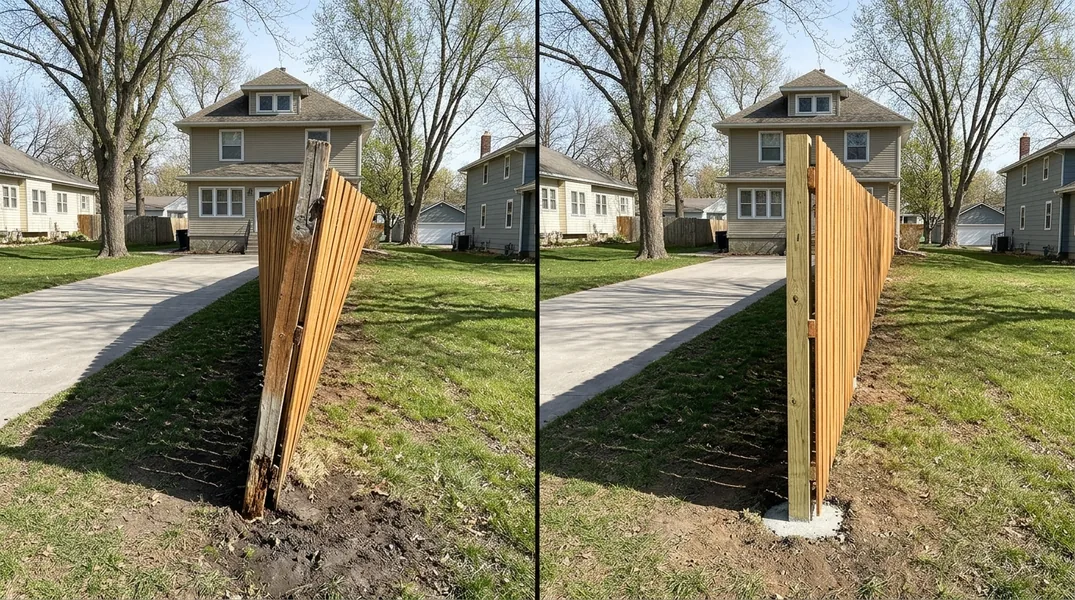
The Lincoln Fence Problem: Why Fences Lean Here
If you own a home in Lincoln, you've probably noticed something: fences seem to lean more here than in other parts of the country. It's not your imagination, and it's not a sign of poor craftsmanship alone. Lincoln sits on a foundation of loess clay and experiences significant seasonal freeze-thaw cycles that create a perfect storm for fence problems. Understanding why your fence is leaning is the first step toward finding the right solution.
The geology beneath our feet plays a major role in fence stability. Loess clay, which dominates the soil composition across eastern Nebraska, has unique properties that make it particularly challenging for fence installation. This soil type expands when wet and contracts when dry, creating constant movement beneath fence posts. Add to that the intense freeze-thaw cycles we experience each winter, and you have a recipe for leaning fences and failing posts. Many homeowners don't realize that the problem isn't always visible at first, but once a fence starts to lean, the structural issues compound quickly.
Understanding Frost Heave and Fence Post Failure
Frost heave is the primary culprit behind most leaning fence problems in Lincoln. When winter arrives and temperatures drop below freezing, water in the soil around your fence posts freezes and expands. This expansion pushes the soil upward, which in turn lifts the fence post. When spring thaw arrives, the soil settles unevenly, but the post doesn't return to its original position. Year after year, this cycle continues, gradually pushing your fence posts out of plumb until the entire fence leans noticeably to one side.
The problem is compounded by how most residential fence posts are installed. If posts are set too shallow, frost heave has an easier time displacing them. If the concrete around the post isn't properly mixed or applied, water penetrates the concrete and reaches the soil beneath, accelerating the heave cycle. Additionally, poor drainage around the fence line allows water to accumulate, which means more expansion during winter freezes. This is why Wood & Privacy Fence Installation in our region requires special attention to depth, concrete quality, and drainage considerations that many installers overlook.
Loess Clay: The Unique Challenge for Lincoln Fences
Loess is a sediment deposited by wind during the last ice age, and it's remarkably common throughout Nebraska. Unlike sandy or rocky soil, loess clay is incredibly fine and highly susceptible to moisture changes. When it absorbs water, it swells; when it dries out, it shrinks dramatically. This constant expansion and contraction creates movement that's far more pronounced than in other soil types. For fence posts, this means the ground around them is essentially shifting throughout the year, which makes maintaining post stability extraordinarily difficult if the installation wasn't done correctly from the start.
The real challenge with loess clay is that standard fence installation practices developed in other regions often don't work well here. A post set to industry standard depth in sandy soil might be perfectly stable, but the same depth in loess clay can fail within a few years. The clay's tendency to hold water means that drainage becomes critical. If water pools around a fence post or if the concrete footer doesn't extend deep enough to get below the active frost line, you're virtually guaranteed to have problems. This is why choosing an installer who understands local soil conditions makes all the difference between a fence that lasts decades and one that starts leaning within five years.
Recognizing Early Signs of Fence Post Problems
Leaning fence repair becomes much simpler and more affordable if you catch problems early. The first sign is usually subtle: one or two posts that appear slightly out of vertical, or a noticeable gap appearing between fence boards and the posts. You might also notice that gates no longer hang straight or that they're becoming harder to open and close smoothly. These early warning signs indicate that frost heave or soil settling is already underway, and the problem will only worsen as seasons pass.
Another common indicator is visible damage to the concrete footer around the post. If you see cracks in the concrete, spalling (flaking), or areas where the concrete has separated from the post, water is likely infiltrating and accelerating the failure process. Rotted fence post repair becomes necessary when the wood itself begins to decay, which typically happens after years of moisture exposure around the base of the post. The wood at the soil line is especially vulnerable because it's exposed to constant moisture and has limited air circulation. If you notice soft spots, discoloration, or visible rot at the base of posts, the problem has progressed significantly and requires professional attention soon.
Professional Leaning Fence Repair: Solutions That Work
When your fence is already leaning, the solution depends on how severe the problem is and how many posts are affected. For posts that are only slightly out of plumb and structurally sound, a professional can sometimes reset the post by carefully removing concrete, re-leveling the post, and re-pouring new concrete with improved drainage. This approach works best when caught early and when only one or two posts are problematic. However, if multiple posts are leaning or if rotted fence post repair is necessary, replacement is usually the most reliable long-term solution.
Replacing fence posts requires more than simply pulling out the old post and setting a new one. The installation must account for loess clay conditions, which means setting posts deeper than standard, using high-quality concrete, and ensuring proper drainage around the footer. Many professional installers in Lincoln now use concrete that extends below the frost line (typically 36 to 48 inches in our region) and incorporate drainage strategies like gravel bases or perforated pipes to manage water around the posts. If you're considering Wood & Privacy Fence Installation as a replacement, this is the time to invest in proper installation that will prevent these problems from recurring.
Getting Professional Help: When to Call Lincoln Fence
Attempting to repair a leaning fence yourself is tempting, but it's rarely a good idea. Resetting posts requires specialized tools, knowledge of local soil conditions, and understanding of how to properly mix and apply concrete in cold weather. Professional fence post repair also involves assessing whether the overall fence structure is still sound or if more extensive work is needed. If you're noticing leaning posts, soft spots in the wood, or gates that no longer close properly, it's time to reach out to a professional who understands the specific challenges that Lincoln soil and climate present.
Lincoln Fence specializes in understanding and solving the exact problems that cause fences to fail in our region. Whether you need fence post repair, rotted fence post repair, or a complete replacement using proper installation techniques, our team knows how to do it right. We can assess your fence, identify the root cause of any leaning or damage, and recommend the most cost-effective solution for your situation. If you're ready to stop worrying about your fence and get it stabilized, contact us for a free estimate or call (402) 858-4049 to discuss your specific situation. We serve Lincoln and surrounding areas, and we're ready to help you get your fence back to stable, attractive condition.
Looking for a professional fence contractor in Lincoln? Lincoln Fence responds fast for all your fence needs.
Get a Free Quote